
New - October 2026
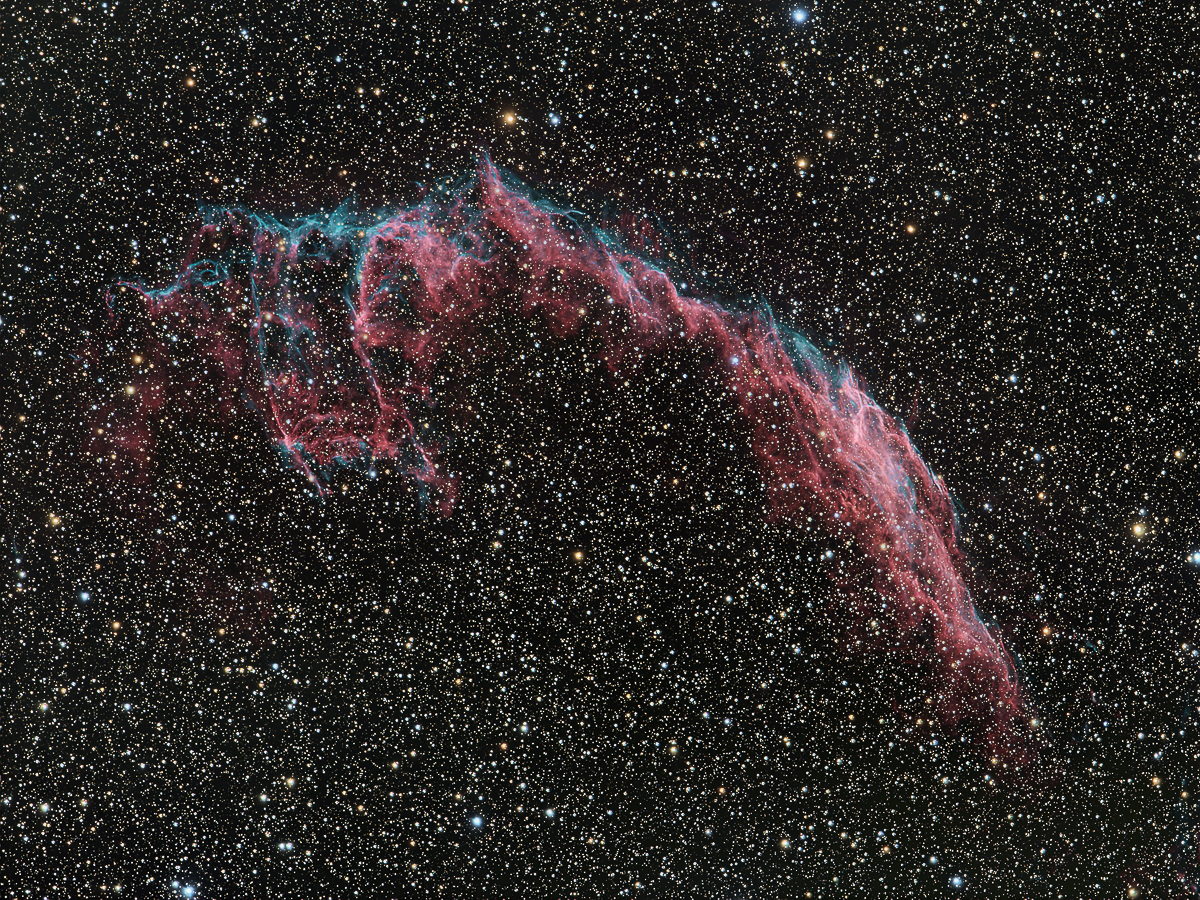
NGC 6992 in Cygnus, 5.-7. Oct. 2026
Nikon D7500a, 600mm f/4
ISO 1600, 66 x 5 min. (5.5 h)
After many months of bird photography, I mounted my trusty 600mm f/4 lens on my telescope mount again and was happy to get everything working again.
In the constellation of Cygnus the Swan, there are remnants of a supernova explosion. The source of the supernova was a star 20 times more massive than our sun, which exploded between 10,000 and 20,000 years ago. At the time of the explosion, the supernova would have appeared brighter than Venus in the sky, and was visible in the daytime. The remnants have since expanded to cover an area of the sky roughly 3 degrees in diameter, 36 times the area of the full Moon. The brighter parts of the Cygnus Loop as it is also called, have their own names and this part is designated NGC 6992 (info with the help of wikipedia). It just fit on my chip.
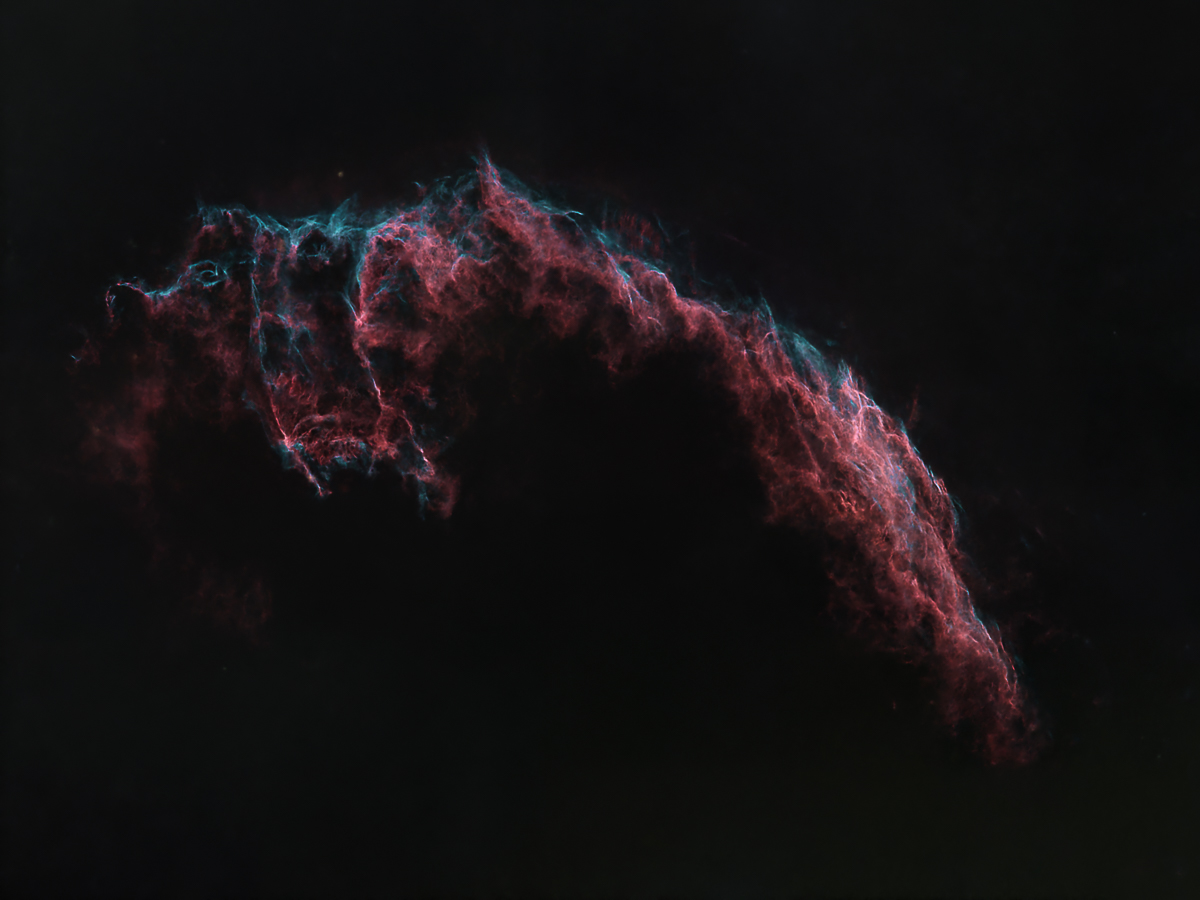
Because there are so many milky way stars in the area, I am also showing an image where my software removed them, so you can see the nebula more clearly. The shock waves are still pushing out hydrogen (red) and oxygen (blue) from the original star.